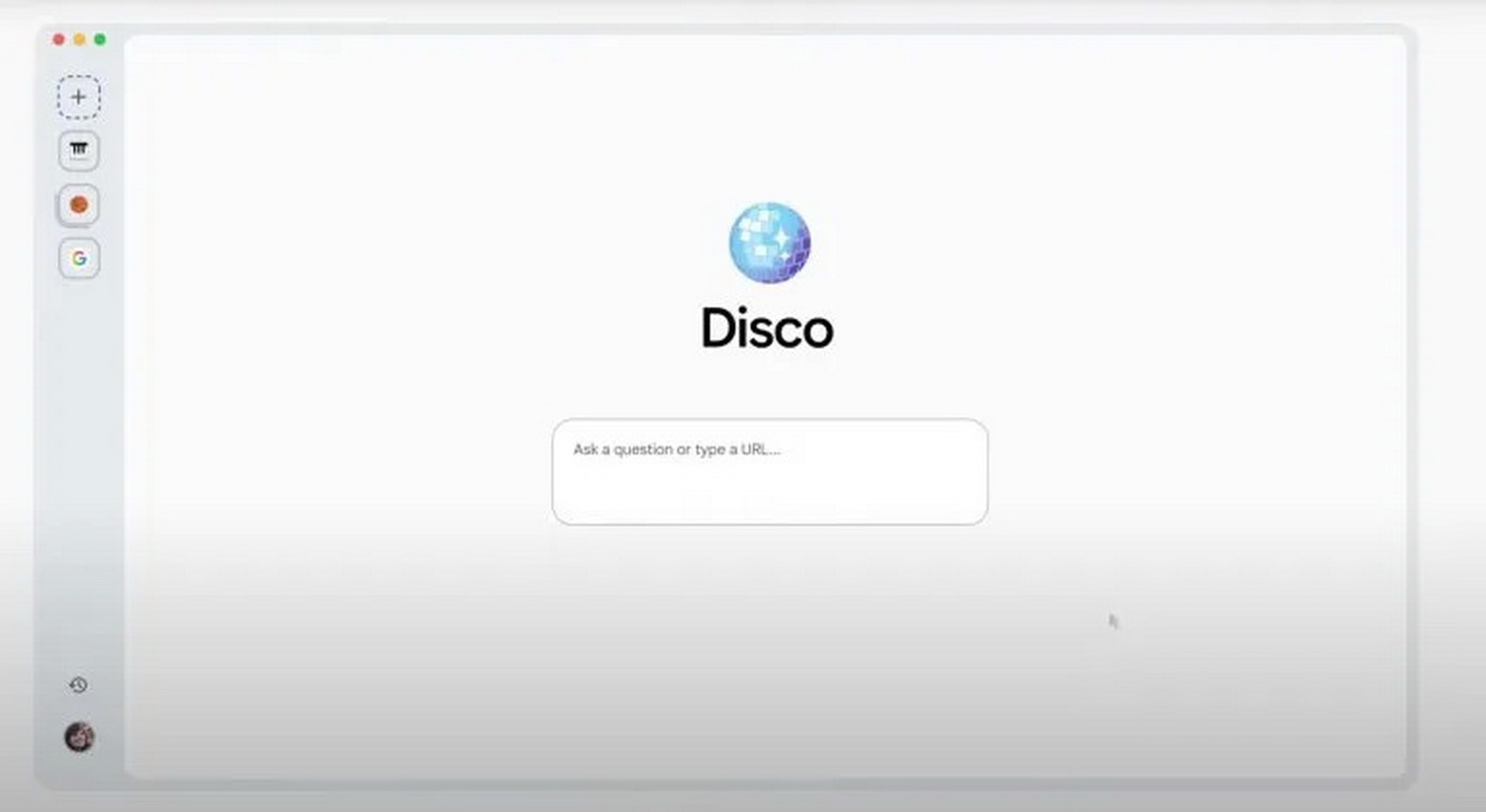
Google Disco is an experimental AI browser by Google that turns your browsing into smart, auto-built tools. You just give a goal, and it creates mini apps (like planners, summaries, dashboards) from your tabs. The way modern organizations search for and consume internal information is fundamentally broken. Google, the undisputed dominant force in organizing the world’s public information , is aggressively expanding its capabilities to solve this exact problem within private enterprise networks.
Enter Google Disco, an emerging tool that goes far beyond the traditional search bar.

Whether you uncovered this tool in an enterprise developer forum, heard it discussed by Google Workspace administrators, or saw it in a beta release note, you likely have questions. What is Google Disco? How does the “Disco Browser” actually function?
This comprehensive guide cuts through the speculation, providing a definitive breakdown of Google Disco’s architecture, its standout features, and how forward-thinking teams are using it to eliminate knowledge silos.
What Is Google Disco?
Google Disco is an advanced, internal collaborative platform developed by Google to help teams organically organize, share, and discover knowledge. It functions as an intelligent curation space—bridging the gap between a collaborative team wiki, a dynamic bookmark manager, and an AI-driven discovery feed.
At its core, Google Disco is engineered for knowledge curation at scale.
Rather than relying on sprawling, deeply nested Google Drive folders or disjointed Slack threads, Disco provides teams with a structured, visually intuitive environment. Information is tagged, categorized, and dynamically surfaced based on user relevance and organizational context.
Initially deployed strictly as an internal tool within Google, access to Disco has steadily expanded to select enterprise partners and dedicated testing groups.
Insight: The era of static document storage is ending. High-performing organizations are shifting toward “active knowledge graphs,” where the system automatically pushes relevant context to employees based on their current workflows, rather than waiting for them to initiate a manual search.
The Enterprise Knowledge Sinkhole: Why Disco Exists
To grasp the strategic value of Google Disco, you must first understand the massive problem it mitigates. Enterprise knowledge management is a multi-billion-dollar challenge.
According to McKinsey & Company, knowledge workers waste an average of 1.8 hours every single day simply searching for and gathering information. This equates to nearly 20% of the standard workweek lost to friction. It is a staggering productivity drain that costs global organizations billions annually.
Google Disco brings the company’s world-class search intelligence directly to private internal knowledge. The underlying philosophy relies on Google’s core engineering competency—ranking and surfacing highly relevant information—and applying those algorithms to corporate environments.
While products like Google Sites and Google Workspace tackle adjacent storage problems, Disco takes a highly opinionated approach. It ruthlessly prioritizes active discovery over passive storage.
Unpacking the Disco Browser
A common point of confusion is the terminology surrounding the Disco Browser. It is vital to understand that the Disco Browser is an interface layer, not a standalone web client.
Do not confuse it with Google Chrome; rather, consider it a specialized navigational environment built exclusively for interacting with your organization’s Disco content ecosystem.
Within this tailored browser interface, users can execute several high-value actions:
- Browse curated collections: Navigate resources organized strictly by topic, project sprint, or specific team.
- Consume algorithmic feeds: Scroll through discovery feeds that proactively surface content based on behavioral signals and peer engagement.
- Access interconnected resources: Quickly launch documents, URLs, and videos linked by colleagues.
- Execute semantic queries: Search across the entire workspace utilizing Google’s advanced, context-aware internal search technology.
The interface prioritizes visual clarity, utilizing card-based UI layouts and lightweight navigation paradigms. This intentional design ensures non-technical team members can extract value immediately without requiring extensive training.

The 7 Core Google Disco Features
What makes Google Disco a compelling upgrade for enterprise teams? Its value is driven by seven distinct Google Disco features.
1. Algorithmic Content Curation
Disco transcends simple cloud storage by applying sophisticated ranking signals to the internal data. It surfaces the highest-value content for a given user, mirroring the algorithmic logic of Google Web Search but safely confined within private organizational perimeters.
2. Dynamic Collaborative Collections
Teams can architect shared collections—curated, interactive libraries housing links, videos, and documentation—where any authorized member can contribute. Unlike static Drive folders, these collections are explicitly optimized for fluid browsing and exploration.
3. Contextual Metadata and Tagging
Every asset ingested into a Disco workspace can be enriched with customized contextual metadata. This dramatically improves filterability, preventing digital hoarding and ensuring that large teams can instantly locate niche materials months after they were uploaded.
4. Native Workspace Integration
Frictionless interoperability is key. Disco integrates natively with the broader Google Workspace ecosystem, including Drive, Gmail, and Google Meet. Corporate knowledge spread across these platforms can be surfaced inside Disco without requiring manual re-uploading or redundant data entry.
5. Behavioral Engagement Analytics
The platform actively monitors which internal assets are viewed, shared, and discussed the most. By capturing these real-time engagement signals, Disco organically elevates high-value resources, bypassing the bottleneck of manual content curation.
6. Machine-Learning Discovery Feeds
Every employee is provided a personalized discovery feed within their Disco interface. This feed is continuously populated based on the user’s specific role, historical behavior, and the trending engagement of their immediate colleagues.
7. Zero-Trust Access Controls
Enterprise software relies entirely on robust security architecture. Disco provides granular, zero-trust permission models. System administrators can precisely dictate view, edit, and contribution permissions at both the global workspace and individual collection levels.
Implementation Guide: How to Use Google Disco
Successfully rolling out a new enterprise platform requires strategic intent. Here is a tactical, step-by-step breakdown of how to use Google Disco effectively.

Step 1: Provision the Workspace Disco operates within the Google Workspace ecosystem. Access it via your company’s dedicated URL or the Workspace app launcher. If it is not visible, your IT administrator must provision access via the Google Admin Console.
Step 2: Architect Initial Collections Collections serve as the foundational organizational unit. Click “New Collection,” assign a clear nomenclature, write a definitive description, and establish strict access permissions.
Step 3: Populate High-Value Assets You can inject content via direct URLs, automated Google Drive imports, or by utilizing the Disco browser extension to clip external web resources. Ensure every piece of content is heavily tagged and assigned to proper subcategories.
Step 4: Train the Discovery Engine Navigate to your personal feed. Actively engage with the surfaced items by saving, commenting, or reacting. This interaction data is critical; it trains Disco’s recommendation algorithms to deliver increasingly accurate content to your team over time.
Step 5: Execute Semantic Searches Utilize the unified search bar to instantly query across all accessible collections. Because it is powered by Google’s semantic search infrastructure, you can search by concept or context rather than relying on exact-match titles.
Google Disco vs. Traditional Google Tools
Understanding where Disco fits into your existing tech stack is crucial for enterprise architects. Disco is not designed to cannibalize existing tools; it occupies a highly specialized niche.
| Capability Feature | Google Drive | Google Sites | Google Disco |
| Primary Architecture | File storage & sync | Internal publishing | Content discovery |
| Algorithmic Feed | No | No | Yes |
| Recommendation Engine | No | No | Yes |
| Collaborative Curation | Limited | Moderate | Core functionality |
| Contextual Tagging | Basic | Basic | Advanced metadata |
| Optimal Use Case | Raw document hosting | Static Intranets | Dynamic knowledge surfacing |

Strategic High-Impact Use Cases
Organizations that deploy structured knowledge discovery tools report up to a 25% reduction in time wasted searching for internal documentation, according to Gartner research. Disco is perfectly engineered to capture this ROI.
Accelerated Employee Onboarding: Human Resources and engineering leads can compile definitive, curated collections of training modules, codebase architecture, and vital operational links. This drastically minimizes the friction and time-to-productivity for new hires.
Continuous R&D and Engineering Documentation: Technical teams manage sprawling architectures. Disco allows engineers to build centralized libraries of API documentation, architectural decision records (ADRs), and internal runbooks that automatically surface based on a developer’s current project context.
Real-Time Sales Enablement: Go-to-market teams operate in highly competitive environments. Disco empowers marketing to push updated battle cards, case studies, and pitch decks into collections that seamlessly propagate to frontline sales representatives exactly when they need them.
Insight: The most successful implementations of AI-driven knowledge tools treat information as a living asset. They assign dedicated “knowledge managers” to audit the algorithms, ensuring the platform surfaces pristine data rather than outdated legacy documents.
Limitations and Enterprise Considerations
Despite its impressive architecture, technology leaders must evaluate several practical constraints before attempting a widespread deployment:
- Restricted Availability: Google Disco is still navigating phased rollouts and limited availability phases. Access is largely dependent on your specific region and Google Workspace enterprise tier.
- The Cold Start Problem: The user interface is undeniably clean, but the system’s value relies entirely on a well-architected data foundation. Establishing a functional workspace demands serious upfront planning and relentless curation discipline.
- Algorithmic Reliance on Adoption: Disco’s machine-learning features compound in value only when teams actively use them. In environments with low initial adoption, the recommendation engine suffers from data starvation, weakening the discovery feed.

FAQ
What is Google Disco?
Google Disco is an advanced enterprise knowledge discovery and curation platform built to help teams logically organize, tag, and collaboratively surface internal organizational data. It leverages Google’s underlying search and recommendation algorithms.
Is the Disco Browser a replacement for Google Chrome?
No. The “Disco Browser” is simply the internal navigational interface within the Disco platform used to explore enterprise workspaces. It is not a standalone web browser designed for public internet surfing.
Who currently has access to Google Disco?
Access is predominantly limited to enterprise-tier Google Workspace users. Availability is controlled by Google’s deployment schedules and requires activation by your organization’s internal IT administrators.
How does Google Disco differ fundamentally from Google Drive?
Google Drive is optimized for static file storage, synchronization, and direct sharing. Google Disco is an active discovery engine optimized to organically recommend and curate information based on user behavior and metadata, rather than merely hosting files.
Can Disco index data from non-Google applications?
At present, Disco is heavily optimized for native integrations across the Google Workspace ecosystem (Docs, Drive, Meet). While third-party API support may expand, the platform currently operates best within a pure Google environment.
Conclusion
Google Disco is a highly strategic evolution in Google’s enterprise software portfolio. By successfully transplanting the algorithmic intelligence of global web search into the walled gardens of corporate intranets, Disco provides a tangible solution to a notoriously expensive problem: information friction.
With its intuitive Disco Browser interface, granular metadata controls, and proactive discovery feeds, the Google Disco features are perfectly aligned with the demands of modern, distributed knowledge workers. Furthermore, mastering how to use Google Disco requires minimal technical overhead, removing the traditional barriers to widespread corporate adoption.
As Google inevitably expands the availability of this platform, it is positioned to become foundational infrastructure for how agile companies manage their collective intelligence. If your teams are losing hours blindly searching shared drives, Google Disco represents the next logical step in your technology stack.
See More Awesome Post Like this on Our Blog.